
Typhoon Saudel: A Third Consecutive Offshore Field Validation for the Same Group of Floating LiDAR Systems
Another Typhoon, Another Test for the Same Group of Systems
On August 28, 2026, Typhoon No. 18 Saudel made landfall along the coast of Zhejiang Province as a typhoon, with maximum sustained winds reaching Force 12 (35 m/s). Following Typhoon Bavi in July and Typhoon Dolphin in August, this marked the third extreme-weather test for the same group of offshore floating LiDAR systems operating in nearby waters and along a similar typhoon track.
Compared with a single extreme-weather event, repeated validation under real offshore conditions provides a stronger basis for observing operating consistency and system resilience across multiple impacts, while building a valuable continuous dataset for reliability assessment.
Emergency Response Enters Routine Operation
Following the typhoon warning, the Blue Aspirations Typhoon Emergency Monitoring Dashboard was activated again, overlaying Saudel's real-time track with project locations and continuously tracking key operating parameters and system status. After two field responses during Typhoons Bavi and Dolphin, the emergency response process has moved further into routine operation.
Throughout the event, the platform provided remote visual monitoring and real-time situational awareness under extreme weather conditions. Abnormal conditions triggered timely alerts, while the O&M team responded according to established procedures, supporting system operation and project delivery. Three consecutive typhoon responses have also further tested the company's capabilities in centralized monitoring and rapid response under severe meteorological conditions.
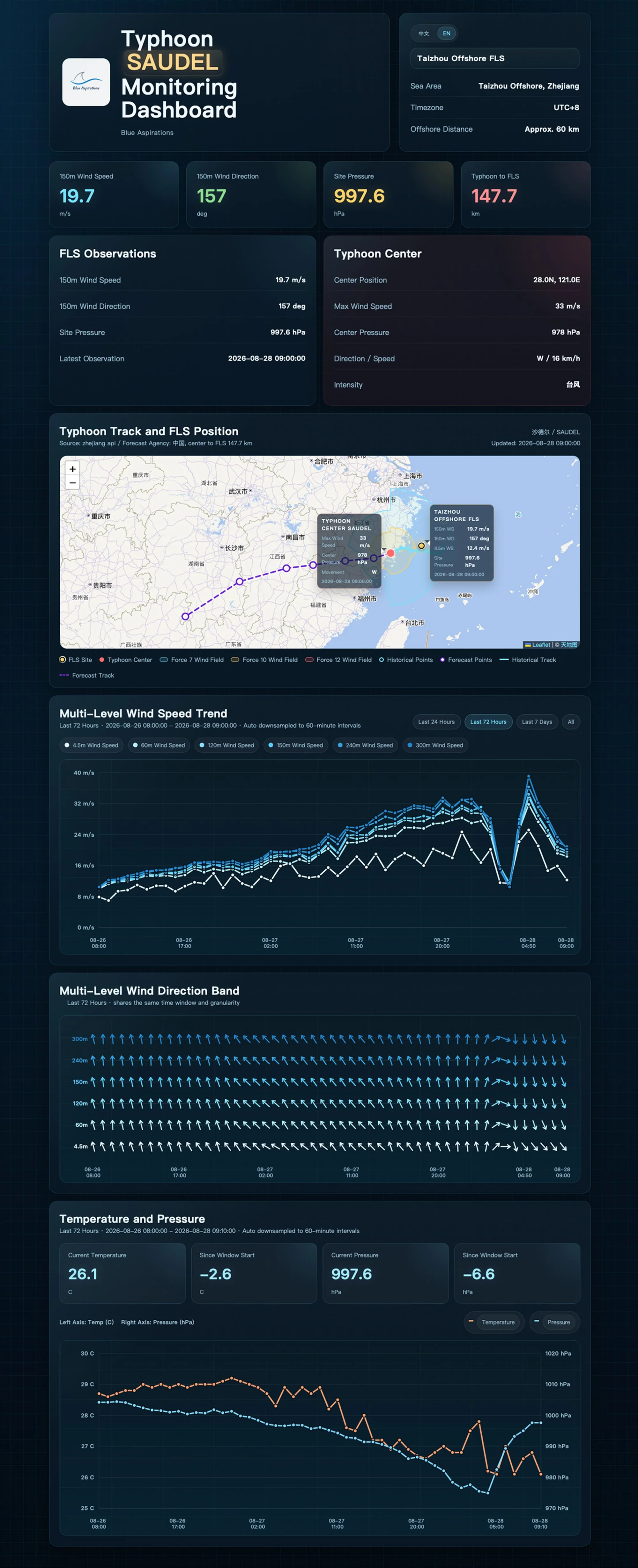
Typhoon Emergency Monitoring Dashboard(Internal Project)
System Performance and Data Validation
From Typhoon Bavi in July to Typhoons Dolphin and Saudel in August, the same group of systems experienced three consecutive typhoon events. Compared with the performance of a single system or a single event, continuous operating data across multiple projects and events provides a stronger indication of operating consistency and overall system resilience under real offshore conditions.
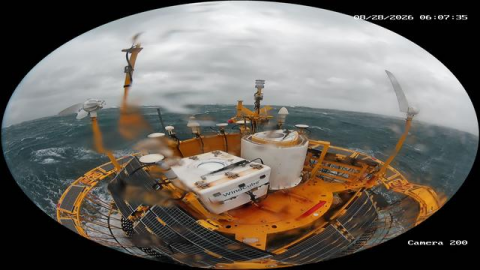
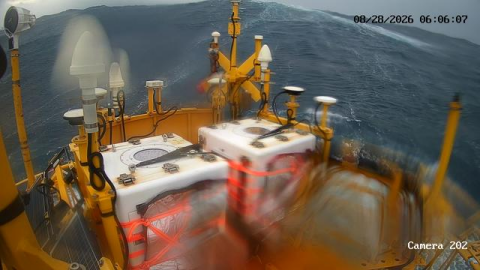
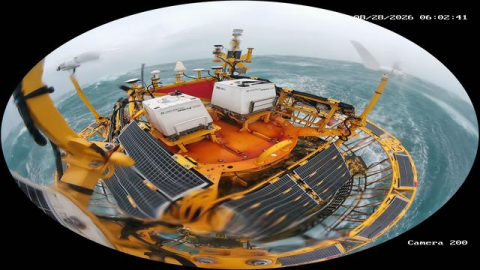
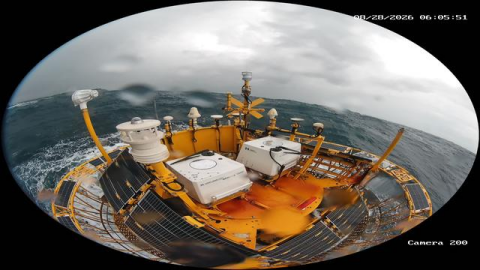
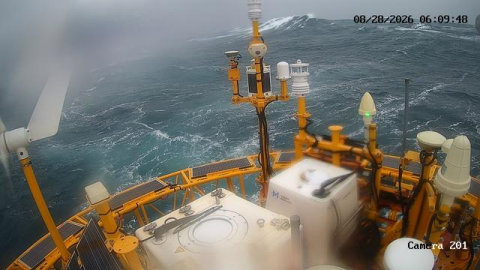
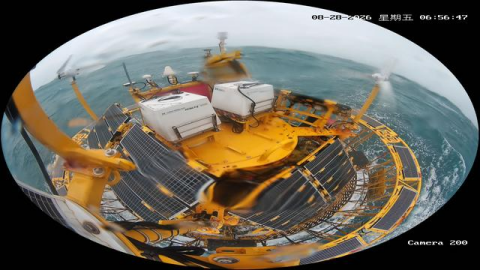
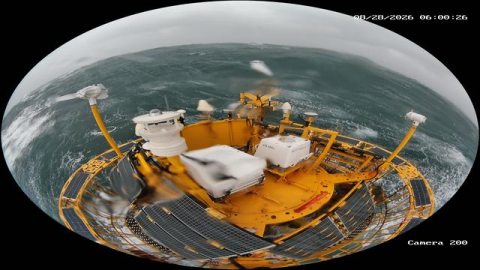
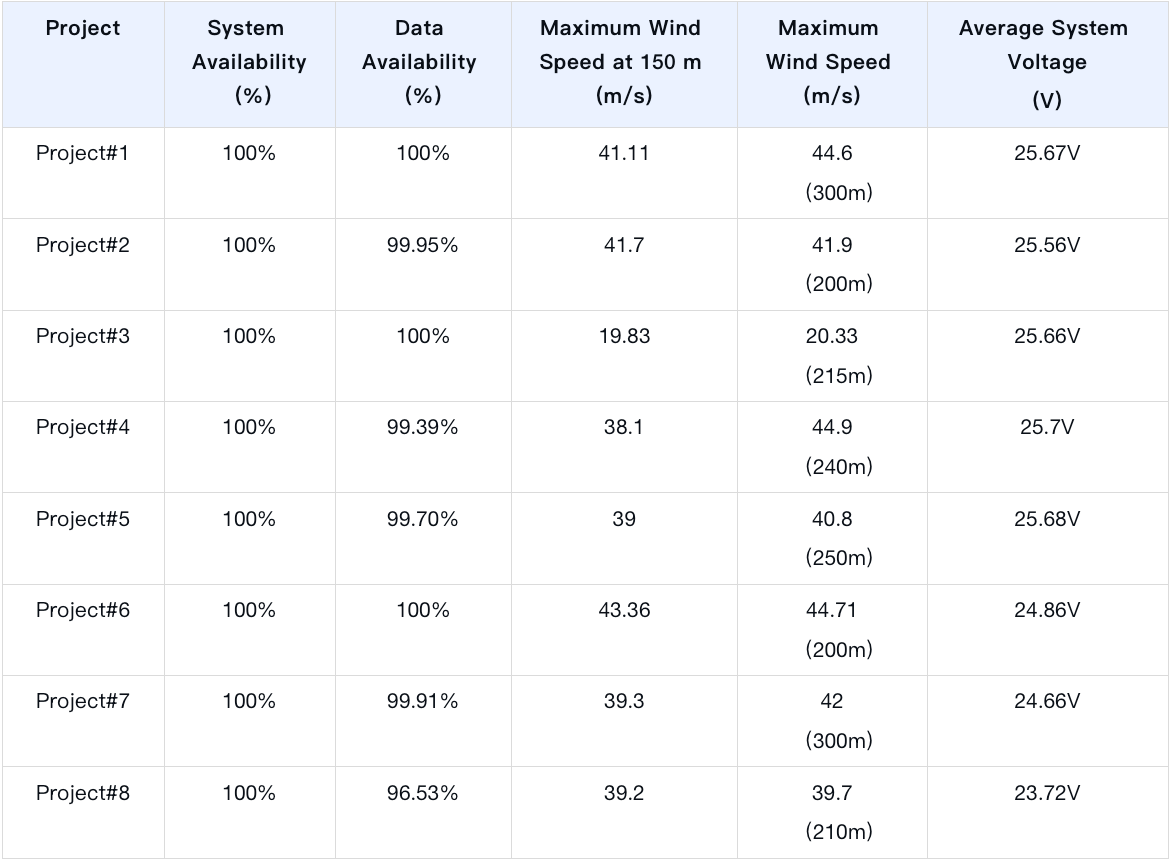
Measured data collected during the typhoon impact period (August 27, 08:00 - August 28, 07:50) showed that the same group of systems continued to maintain 100% System Availability, with average Data Availability of 99.44%. Average system voltage remained between 23.7 V and 25.7 V, consistently above the low-voltage protection threshold. The power supply system remained stable throughout sustained high winds and heavy rainfall.
A project on the outer edge of the typhoon impact area recorded a maximum wind speed of 19.8 m/s at 150 m, while a project in the core impact area recorded 43.4 m/s at 150 m, with a maximum wind speed of 44.7 m/s at 200 m. As 150 m represents a typical hub height for modern offshore wind turbines, these measurements provide a direct representation of the wind-loading environment during the typhoon and offer continuous field data to support typhoon-resistant turbine design, operational strategy development, and extreme-condition assessment.
During the typhoon, small wind turbines on some systems experienced operational fluctuations under extreme conditions, and the monitoring platform promptly detected the anomalies and triggered alerts. Thanks to redundant design in critical subsystems including communications and power supply, localized anomalies did not result in system-level interruptions. Overall data acquisition and project delivery remained stable, while system status remained continuously monitorable, actionable, and under control.
Key Performance Metrics During Typhoon Saudel:
Three Typhoons: From One-Off Validation to Continuous Validation
From Typhoon Bavi and Typhoon Dolphin to Typhoon Saudel, the same group of systems experienced three typhoon events across similar offshore areas, creating a continuous set of real-world offshore operating records across separate events. Across all three events, key functions including power supply, communications, monitoring, and emergency response remained stable, further validating operating consistency under repeated extreme conditions. The accumulating field data will also provide practical references for continued system optimization and future offshore wind observation projects.