
Typhoon Dolphin: Another Severe Typhoon Test Along a Similar Track
On August 9, Typhoon No. 13 Dolphin made landfall in Yuhuan, Taizhou, Zhejiang Province as a severe typhoon, reaching Force 14. Its track closely resembled that of Typhoon Bavi one month earlier, again affecting the coastal areas of Zhejiang and Fujian.
With a red typhoon warning issued by the China Meteorological Administration and a higher landfall intensity than Bavi, multiple Blue Aspirations offshore floating LiDAR systems were once again exposed to the storm, including several projects located near the core of the typhoon track.
1. Emergency Response and Real-Time Monitoring
Following the typhoon warning, Blue Aspirations immediately activated its emergency response procedures. The monitoring platform continuously tracked the typhoon path, project locations, and equipment status in real time, providing situational awareness as the systems faced even more severe conditions than during Typhoon Bavi.
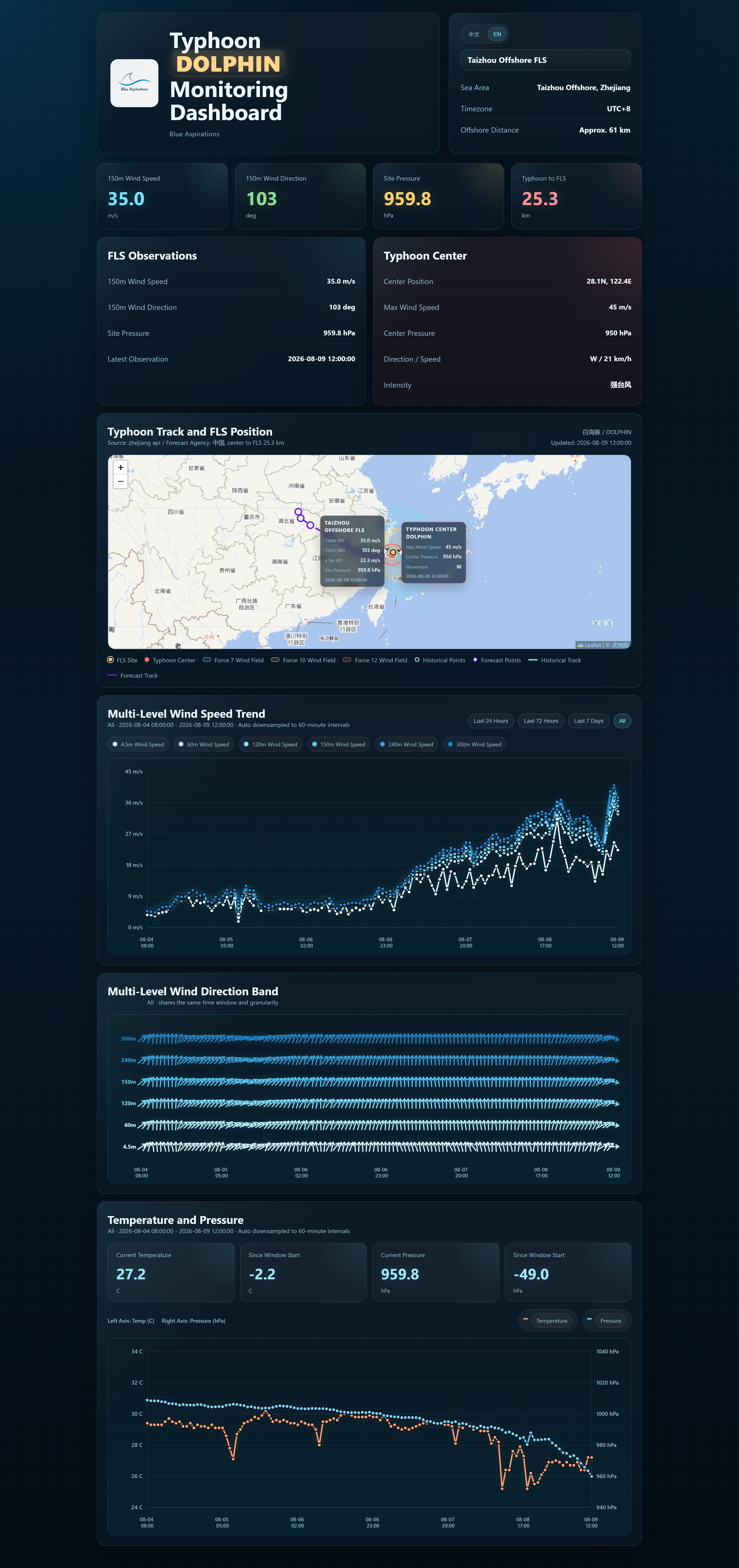
Typhoon Emergency Monitoring Dashboard(Internal Project)
2. Reliable Performance Validated by Field Data
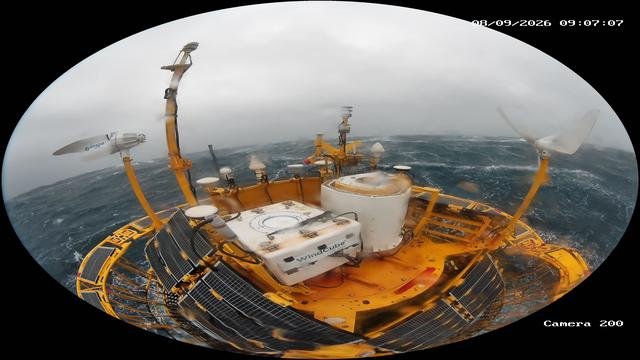
Real-time photographs transmitted from offshore sites provided first-hand information for assessing field conditions and equipment status throughout the typhoon.
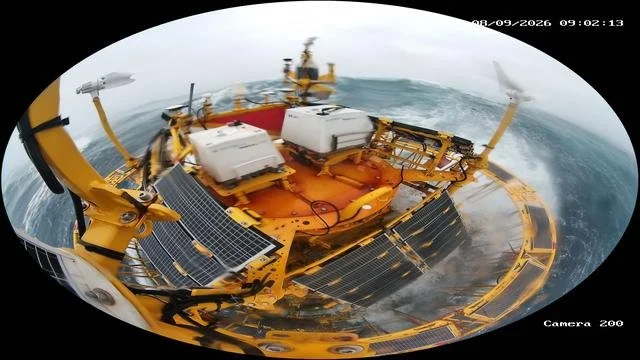
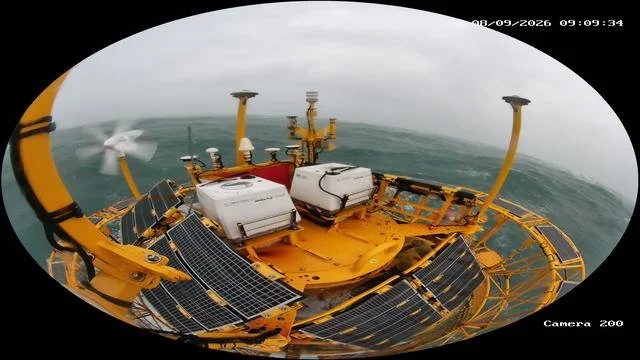
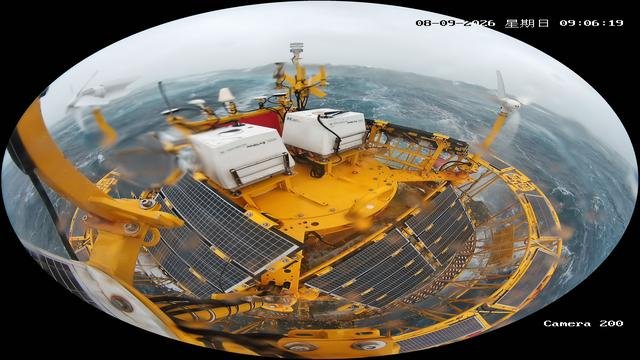
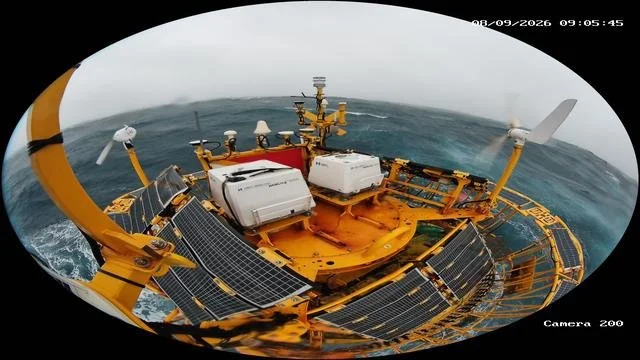
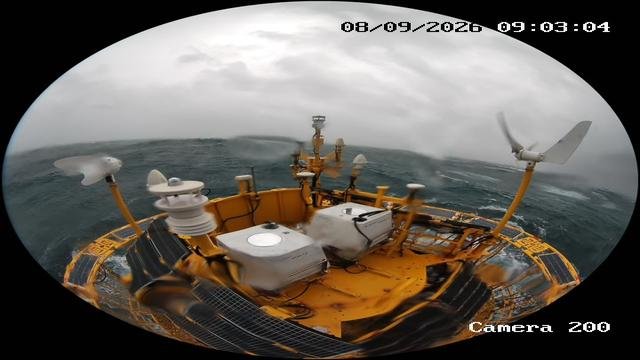
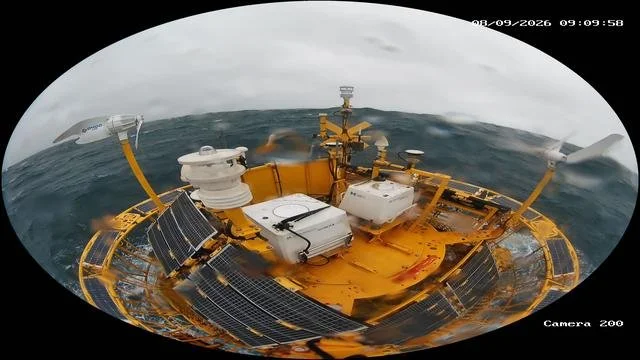
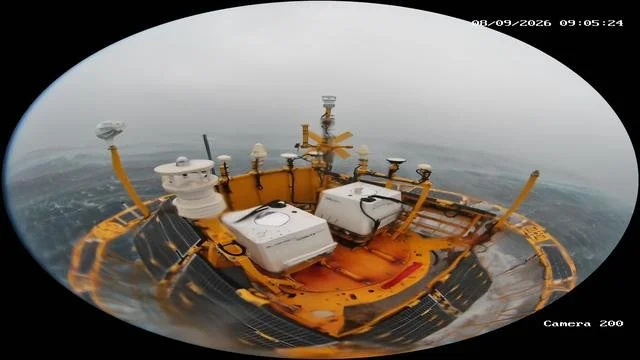
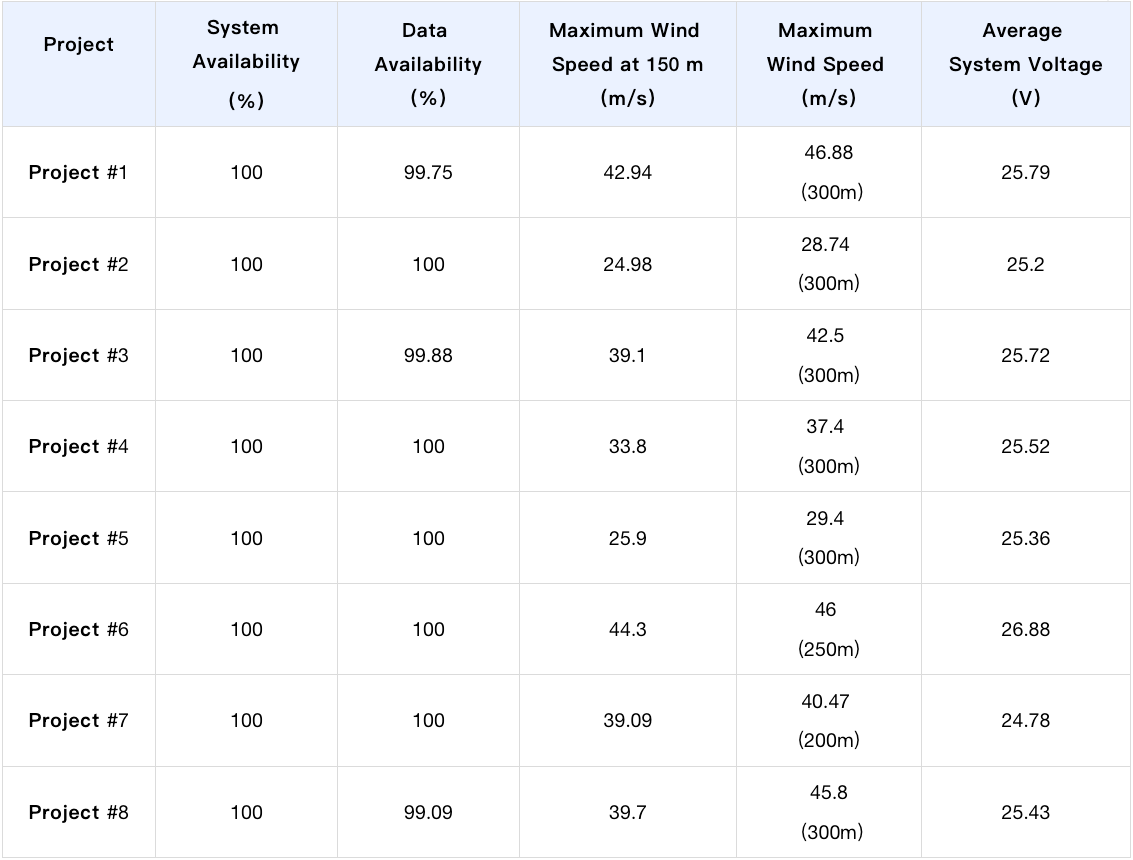
Key Performance Metrics During Typhoon Dolphin (August 8, 08:00 – August 10, 07:50, 2026)
Measured data collected between 08:00 on August 8 and 07:50 on August 10 showed that all projects maintained 100% System Availability. Data Availability ranged from 99.09% to 100%, averaging 99.84%.
Average system voltage remained between 24.78 V and 26.88 V, consistently above the 23.5 V low-voltage threshold, confirming stable power supply throughout the event despite sustained high winds and heavy rainfall.
The project located near the typhoon center recorded a maximum 10-minute mean wind speed of 46.88 m/s at 300 m, corresponding to 42.94 m/s at 150 m. As 150 m represents the typical hub height of modern offshore wind turbines, these field measurements provide valuable references for turbine structural design, operational strategy development, and extreme weather assessment.
During the typhoon, some systems experienced localized operational fluctuations under extreme conditions, including damage to small wind turbines. The monitoring platform identified abnormal conditions and triggered alerts in real time, enabling the O&M team to take immediate response actions.
Thanks to the redundant design of critical subsystems, including communications and power supply, localized issues did not affect overall data acquisition or project delivery. All systems remained safe and under control, with no major structural failures.
3. Continued Validation Under Extreme Conditions
Within one month, two severe typhoons following similar tracks tested the same group of floating LiDAR systems across multiple offshore locations. Their continued operation under extreme marine conditions provides further real-world validation of system reliability and strengthens our experience in responding to severe offshore weather.