
Underwater equipment constantly "Going on Strike"? This anti-biofouling solution solves the industry's pain points.
In long-term ocean monitoring scenarios, biofouling on sensors is one of the core pain points affecting data quality and equipment stability. Once the equipment is submerged, algae, shellfish, microbial films and other organisms gradually attach to the sensor probes, optical windows, and flow channel surfaces, leading to signal attenuation, data drift, slower response times, and even false alarms, distortion, or data interruptions. In marine environments with high temperature, high salinity, and high nutrient levels, fouling develops even more rapidly, often requiring frequent manual cleaning and maintenance. This not only increases operational costs but also compromises the completeness and reliability of continuous observational data.
Product introduction
Biofouling is a major challenge for ocean monitoring and long-term deployment of underwater equipment. The BA-UVL-INT anti-biofouling UV lamp series, independently developed by Blue Aspirations, addresses this issue.
The BA-UVL-INT anti-biofouling UV lamp uses ultraviolet light to directly destroy the cellular structure of bacteria, algae, barnacles, and mussel larvae, rendering them incapable of reproduction and attachment. By preventing biofouling at its source through a physical, active protection mechanism, it operates without chemical pollution or environmental risks, making it fully suitable for ecologically sensitive waters and aquaculture areas. It effectively controls the growth of marine organisms on virtually any underwater equipment, thereby reducing data degradation and loss caused by biofouling, as well as lowering maintenance costs.
This product is suitable for sensors (CTD, depth/pressure and ADCP), marine lanterns, cameras, hydrophones and transducers.
The following two models are currently available:
BA-UVL-INL-B3:Three-way fixed UV lamp set
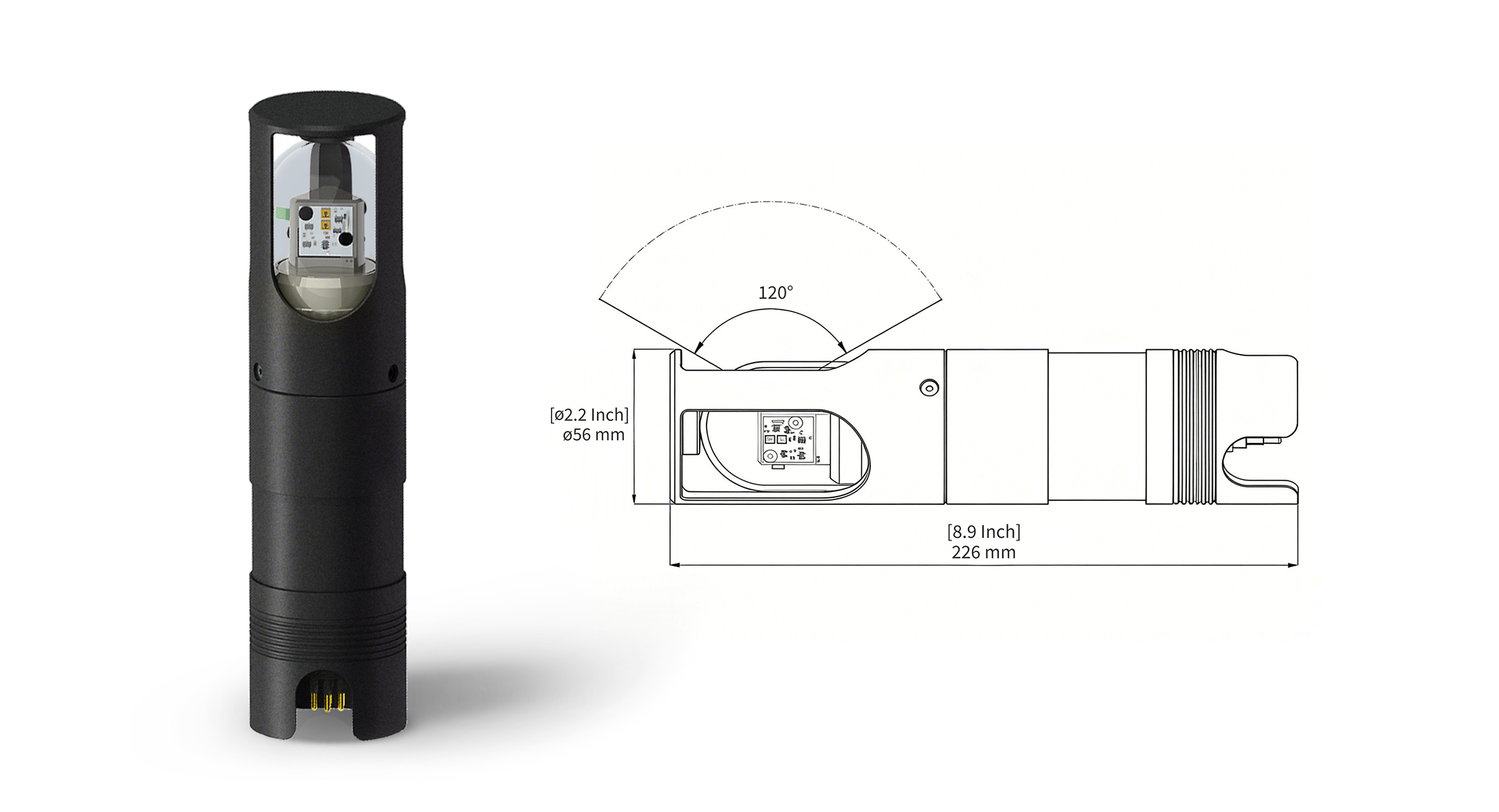
| Parameter | Specification |
|---|---|
| Model | BA-UVL-INT-B3 |
| Power supply | 9–36 VDC |
| Lamp body dimensions | Ø56 × 226 mm |
| Housing material | Aluminum alloy + PC ABS / Titanium alloy (optional) |
| Lens material | Quartz glass |
| Pressure resistance depth | > 500 m (customizable) |
| Effective distance | 10 cm @ 10 μW/cm² (adjustable) |
| Accessories | None |
BA-UVL-INL-BX:Adjustable-direction & adjustable-quantity lamp set
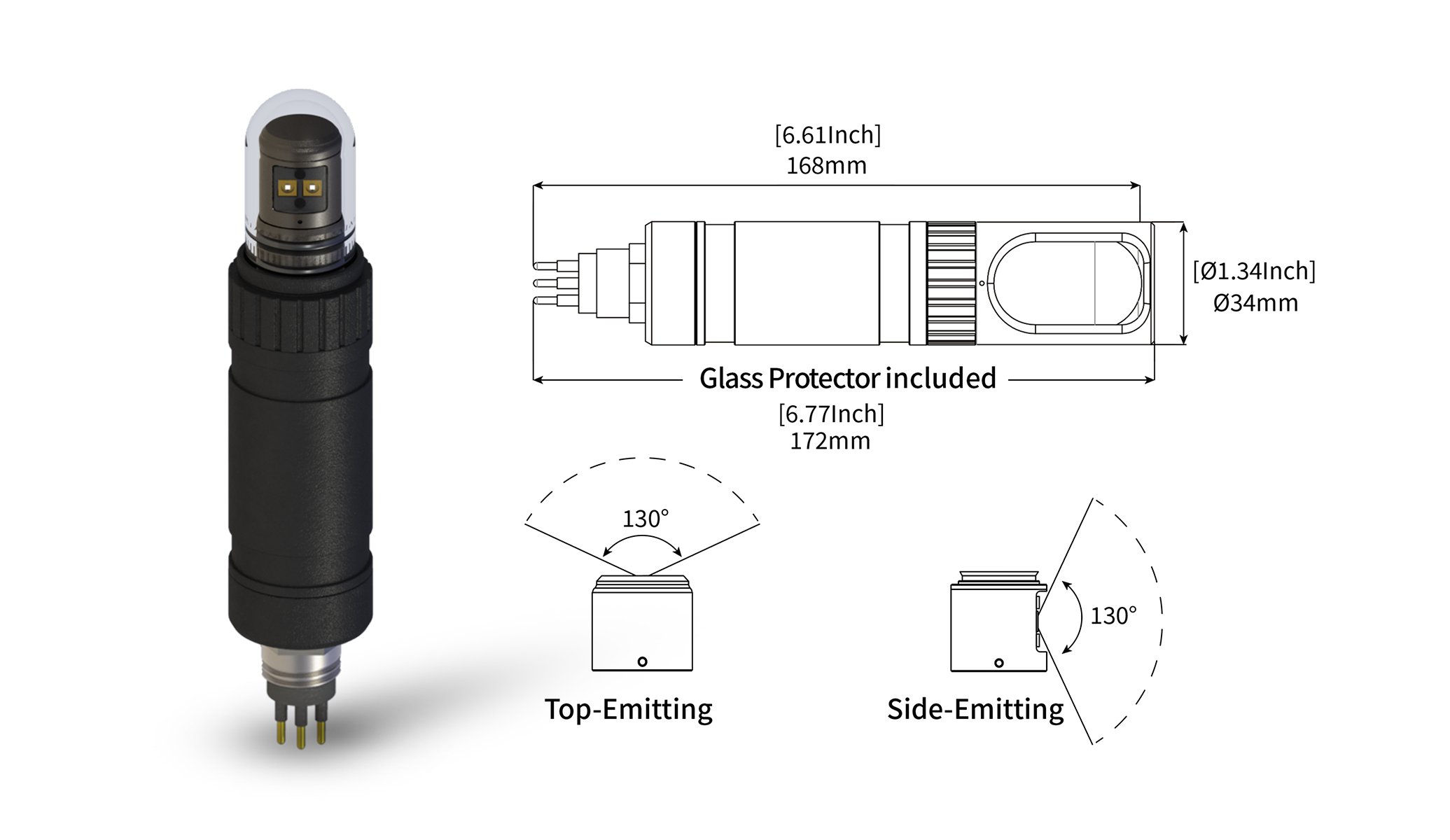
| Parameter | Specification |
|---|---|
| Model | BA-UVL-INT-BX |
| Power supply | 9–36 VDC |
| Lamp body dimensions | Ø34 × 172 mm |
| Housing material | Aluminum alloy + PC ABS / Titanium alloy (optional) |
| Lens material | Quartz glass |
| Pressure resistance depth | > 500 m (customizable) |
| Effective distance | 10 cm @ 10 μW/cm² (adjustable) |
| Accessories | Glass shield, upward lamp set, side lamp set |
Underwater Experimental Verification
To verify the effectiveness of this anti-biofouling solution, we conducted an underwater deployment test, continuously capturing images of both the UV lamp irradiated area and the unprotected area. The difference in biological attachment between the two areas was compared to visually confirm the product's antifouling performance, underwater reliability and stability.
Initial State (2026/02/06, Day 1)
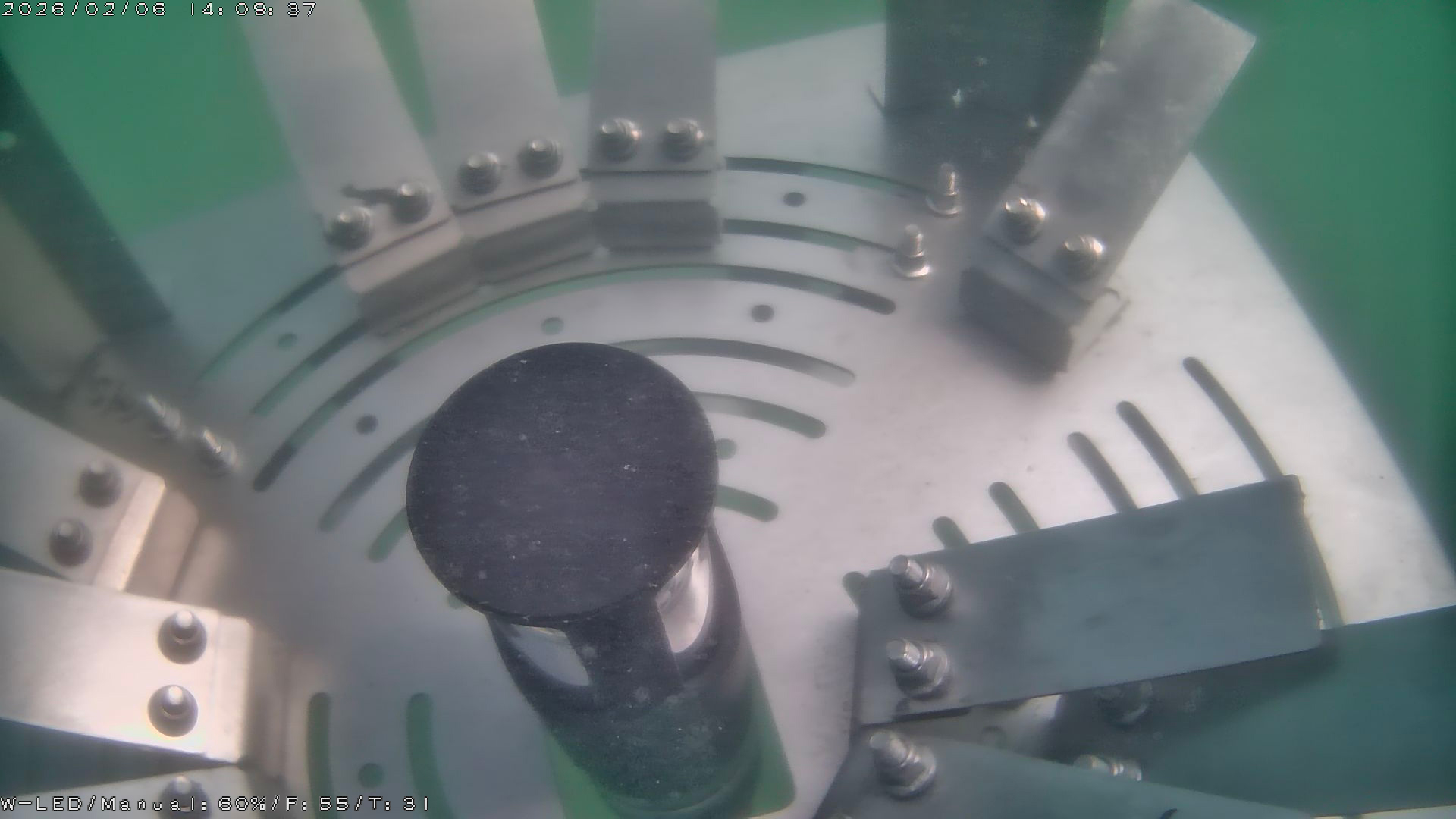
Equipment Status: The main body of the test setup is a 316L stainless steel mounting base, equipped with the BA-UVL-INT series UV lamp. The underwater camera is operating normally.
UV-Irradiated Area (Right-side steel plate): Clean, with no fouling attached.
Unprotected Area (Non-irradiated part of the base): Similarly free of attachments; the water is clear, with good baseline conditions. Details are clearly identifiable, making this area suitable as a baseline reference sample for subsequent measurements, ensuring consistent initial conditions for the actual testing.
30-Day Status (2026/03/07, Day 30)
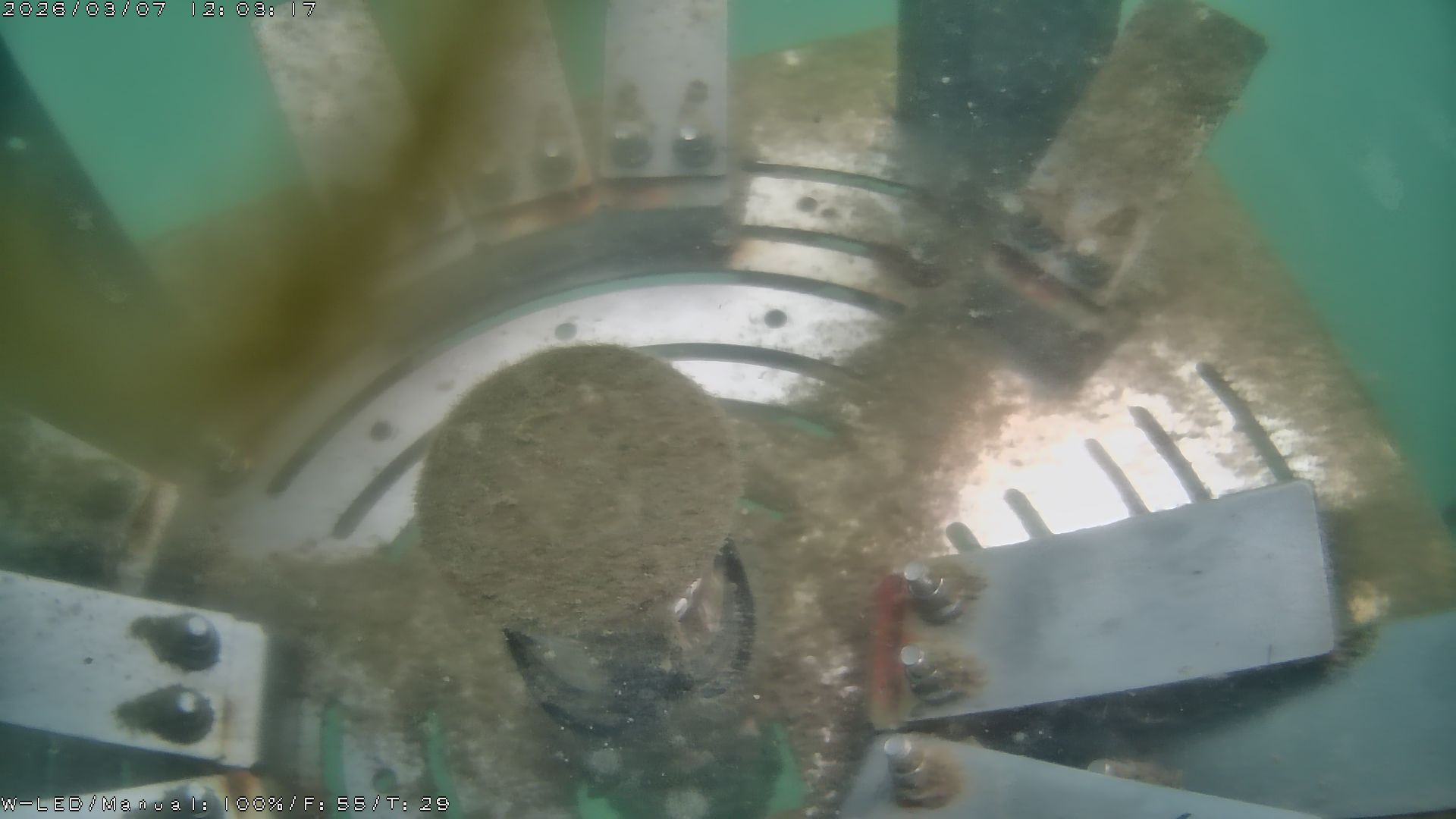
Equipment status: The underwater camera and UV lamps function normally with no faults or water leakage, and no obvious corrosion on lamp surfaces.
UV-Irradiated Area (Right-side steel plate): Very little biofouling attached, with only a trace amount of dust-like sediment present.
Unprotected Area (Non-irradiated part of the base): A uniform layer of sediment and microbial biofilm has already formed, indicating the initial stage of biofouling.
50-Day Status (2026/04/01, Day 50)
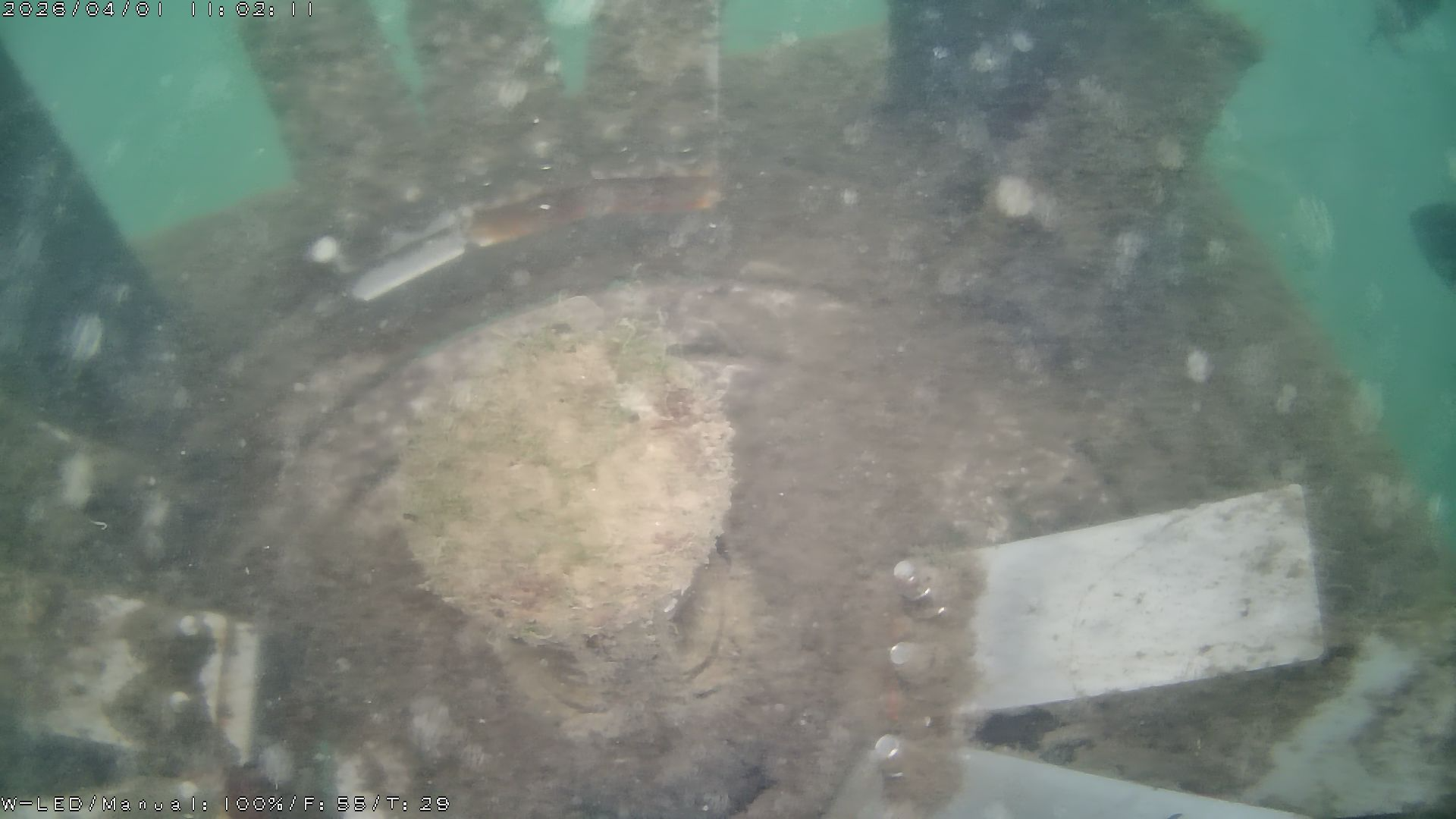
Equipment Status: The underwater camera and UV lamp continue to operate stably, with no water leakage, no LED damage, and no corrosion or deformation of the lamp housing.
UV-Irradiated Area (Right-side steel plate): Still very little biofouling attached, with no significant biofilm, algae, or barnacle growth.
Unprotected Area (Non-irradiated part of the base): Completely covered by a thick layer of fouling organisms, making component details indistinguishable, with gaps filled by sediment.
Other anti-biofouling products
The anti-biofouling film is a protective fouling-release film equipped with a dedicated antifouling layer. This product is designed completely without biocides or repellents, demonstrating high environmental compliance. By applying this antifouling protective film, it can effectively prevent surface damage caused by the attachment of various marine organisms such as barnacles, polychaetes, and mussels over the long term.This product is suitable for a wide range of marine engineering and observation equipment, including: marine structures, marine sensors, marine observation equipment; ADCP (Acoustic Doppler Current Profiler), side-scan sonar, multi-beam sonar, multi-parameter water quality monitors/probes, and underwater cameras.