
170-Meter Water Depth Project in South China Sea Successfully Operates for Three Months
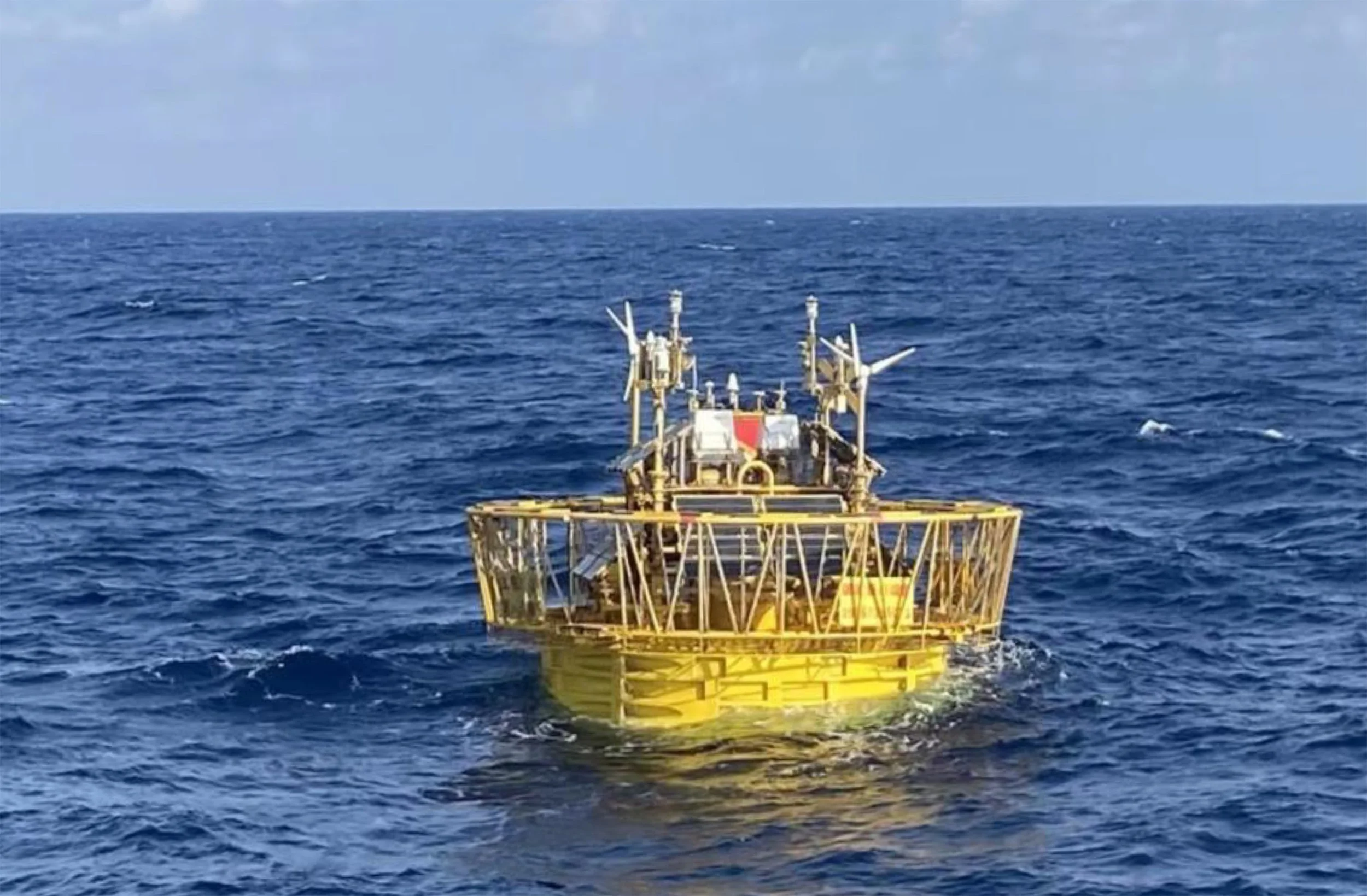
Against the backdrop of accelerating deep-sea offshore wind power development, stable and accurate resource observation is crucial. On December 30, 2025, our company's floating LiDAR wind measurement system, BA-FLS-NX5, was successfully deployed and commenced stable operation in a South China Sea area with water depths exceeding 170 meters. Leveraging our self-developed sea state forecast system and years of project implementation experience, the team safely completed the deployment within an extremely short weather window, effectively overcoming the operational challenges posed by strong winds, high waves, and compounded winter sea conditions.
This project adopted a "chain + rope" combined mooring solution. The steel mooring chain was equipped with buoys to balance its weight, thereby reducing its impact on the buoy's waterline. Through optimized buoy structure design and buoyancy configuration for deep-water conditions, the system maintained excellent attitude stability under complex sea states. Three months of operational data show: the system availability was 99.89%, and the valid data availability rate was 99.88%.
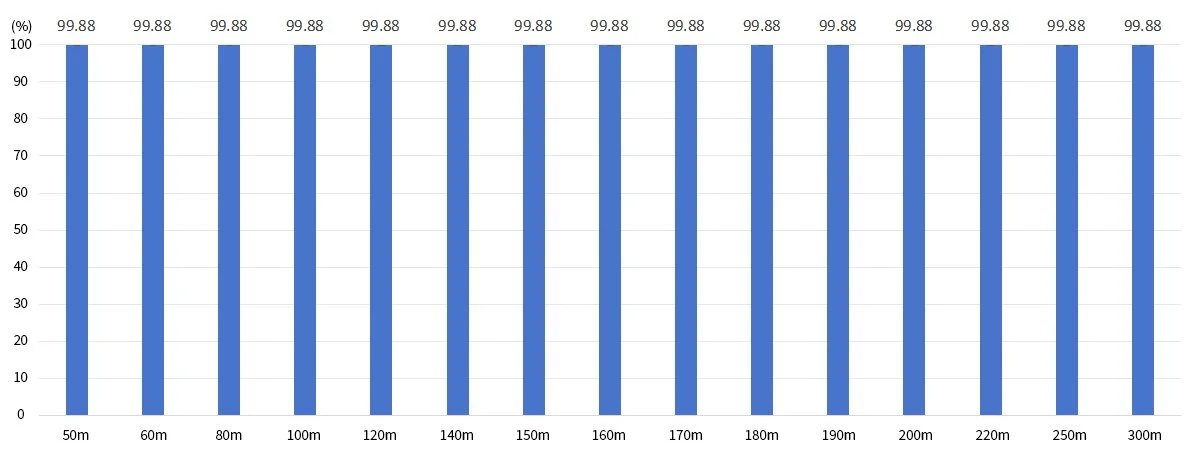
Data Completeness Rate at Various Heights (%)
During the 90-day reporting period from December 31 2025 to March 30 2026, the average system voltage was 25.8V, which is above the 23.5V safety threshold. The average offset distance was 51.55m, remaining within the 150m safety range. This demonstrates a good and stable operational state, providing a strong guarantee for the high-quality observation, processing, and delivery of various data.
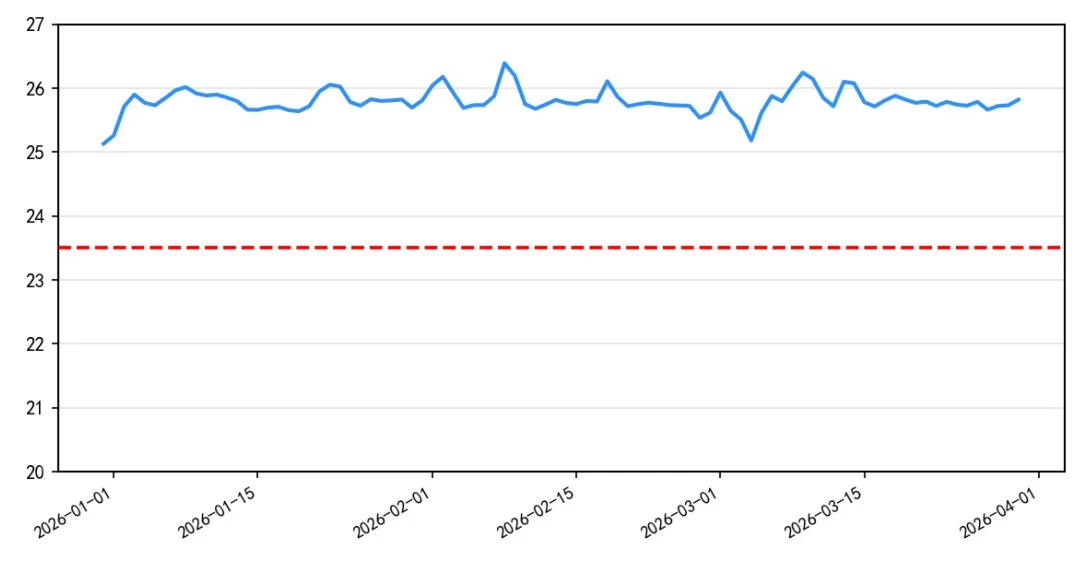
System Voltage Trend (V)
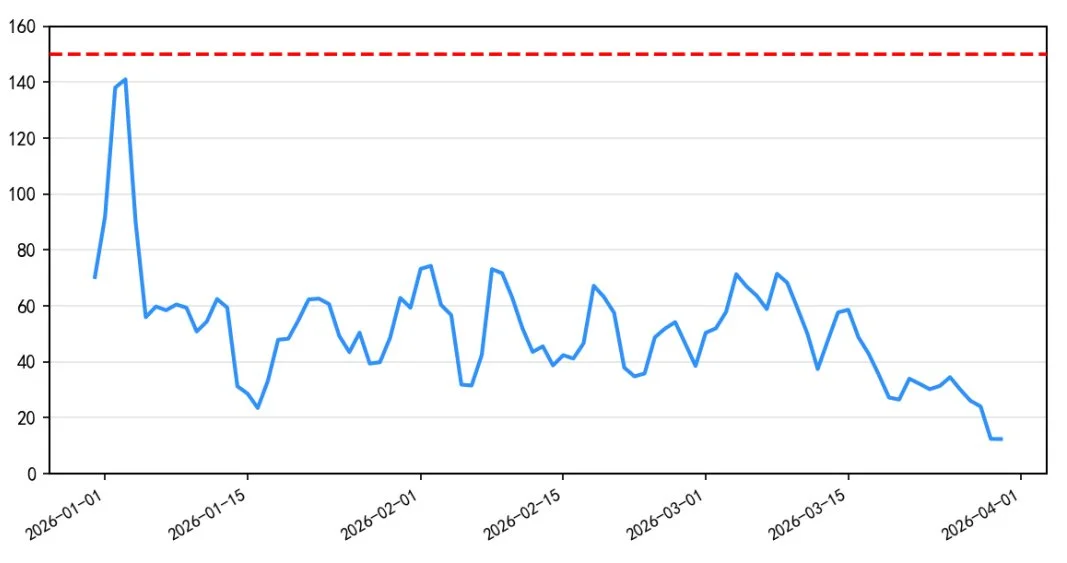
Equipment Offset Distance (m)
Roll and Pitch Data Statistics
| Metric Category | Roll | Pitch |
|---|---|---|
| Average Range (°) | -2.02 ~ -0.63 | -1.77 ~ 0.21 |
| Mean of Averages (°) | -1.21 | -0.89 |
| Maximum Range (°) | 4.97 ~ 18.91 | 5.36 ~ 19.98 |
| Mean of Maximums (°) | 11.78 | 12.45 |
Attitude Auxiliary Data Statistics
| Parameter | Minimum | Average | Maximum |
|---|---|---|---|
| X-axis Angular Velocity (rad/s) | 5.70 | 16.10 | 27.23 |
| Y-axis Angular Velocity (rad/s) | 6.34 | 17.73 | 27.77 |
The attitude assessment criteria are: the mean values of Roll and Pitch should be controlled within ±1.5°, and the maximum values should not exceed 20°. During the monitoring period of this project, all indicators met the above standards. The buoy did not exhibit sustained tilting or abnormal attitudes, and its overall motion state was stable.
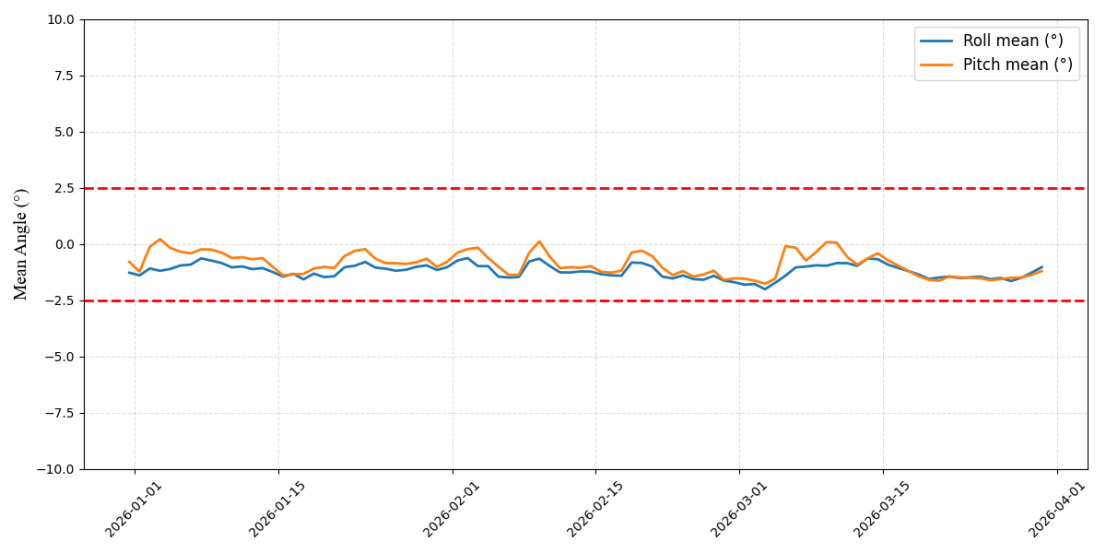
Time-Series Chart of Roll and Pitch Mean Values
As seen from the time-series charts of the mean Roll and Pitch values, the buoy's mean Roll and Pitch showed minor fluctuations throughout the statistical period. Neither indicator displayed a trend of sustained bias increase. The buoy's attitude remained generally stable overall, with no abnormal tilting observed.
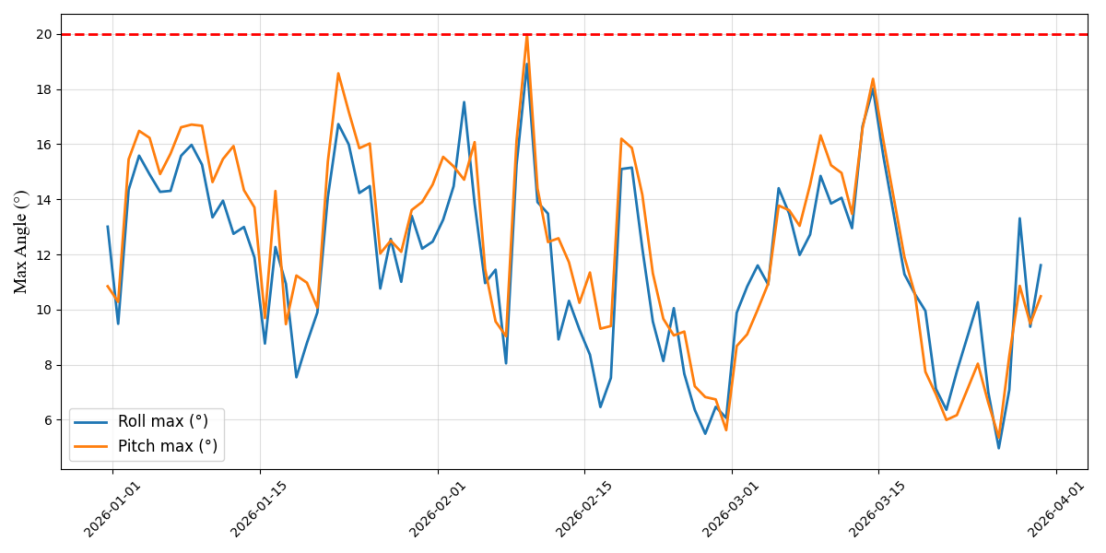
Time-Series Chart of Roll and Pitch Maximum Values
From the time-series charts of the maximum values, the peak variations of Roll and Pitch showed a generally aligned trend, with both parameters exhibiting well-synchronized fluctuations over time. Under most conditions, the Pitch peaks were slightly higher than the Roll peaks, with the overall difference between the two being small. No abnormal separation or sudden changes occurred. Throughout the monitoring period, the maximum values for both indicators did not exceed 20°.
To further verify the physical reasonableness of the attitude peak variations and analyze the relationship between attitude changes, dynamic response, and environmental excitation, a correlation analysis was conducted between the peak maximums of Roll and Pitch and the corresponding peak angular velocities and peak vertical accelerations. The results show a significant positive correlation for both sets of indicators, with Pearson correlation coefficients of 0.964 and 0.974, respectively, indicating high self-consistency of the motion sensor data.
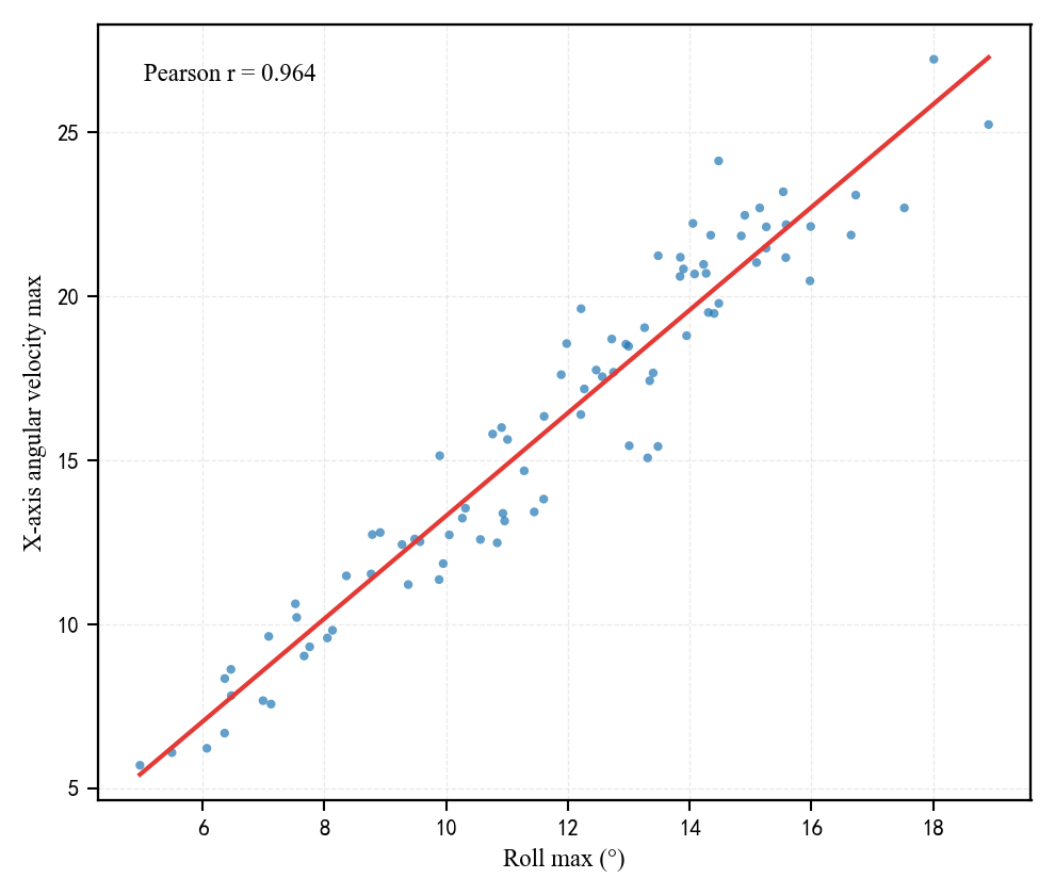
Correlation Chart Between Roll Peak and X-axis Angular Velocity Peak
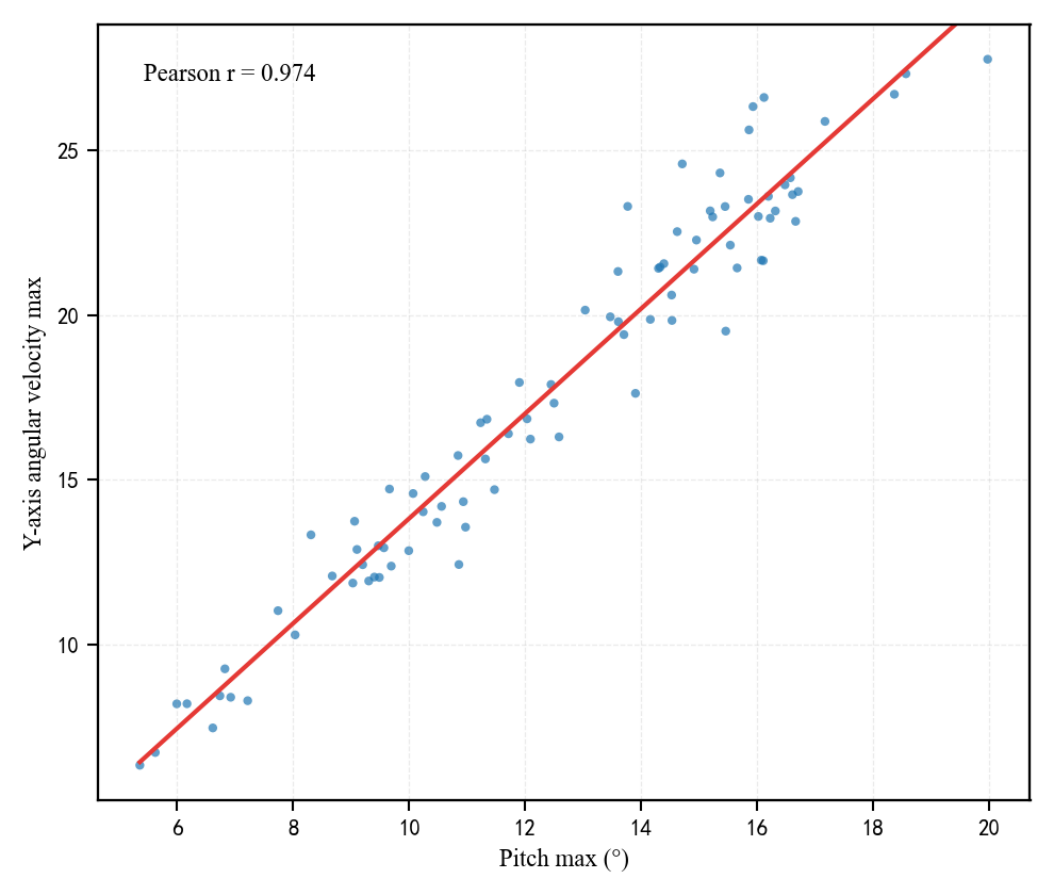
Correlation Chart Between Pitch Peak and Y-axis Angular Velocity Peak
In summary, during this monitoring period, the buoy platform operated stably overall, with good power supply and mooring conditions. The attitude response was generally stable, demonstrating good attitude stability and operational safety.
This quarterly operational data from the 170-meter water depth site in the South China Sea validates the reliability of the BA-FLS-NX5 in terms of its power system, buoy stability, and mooring system design. It further proves its applicability in deep-sea and far-sea conditions. Blue Aspirations remains committed to focusing on customer value. We will continue to refine our products and service capabilities around deep-water and far-sea application scenarios, providing customers with accurate, reliable, and long-term operational wind resource and hydrographic measurement solutions.